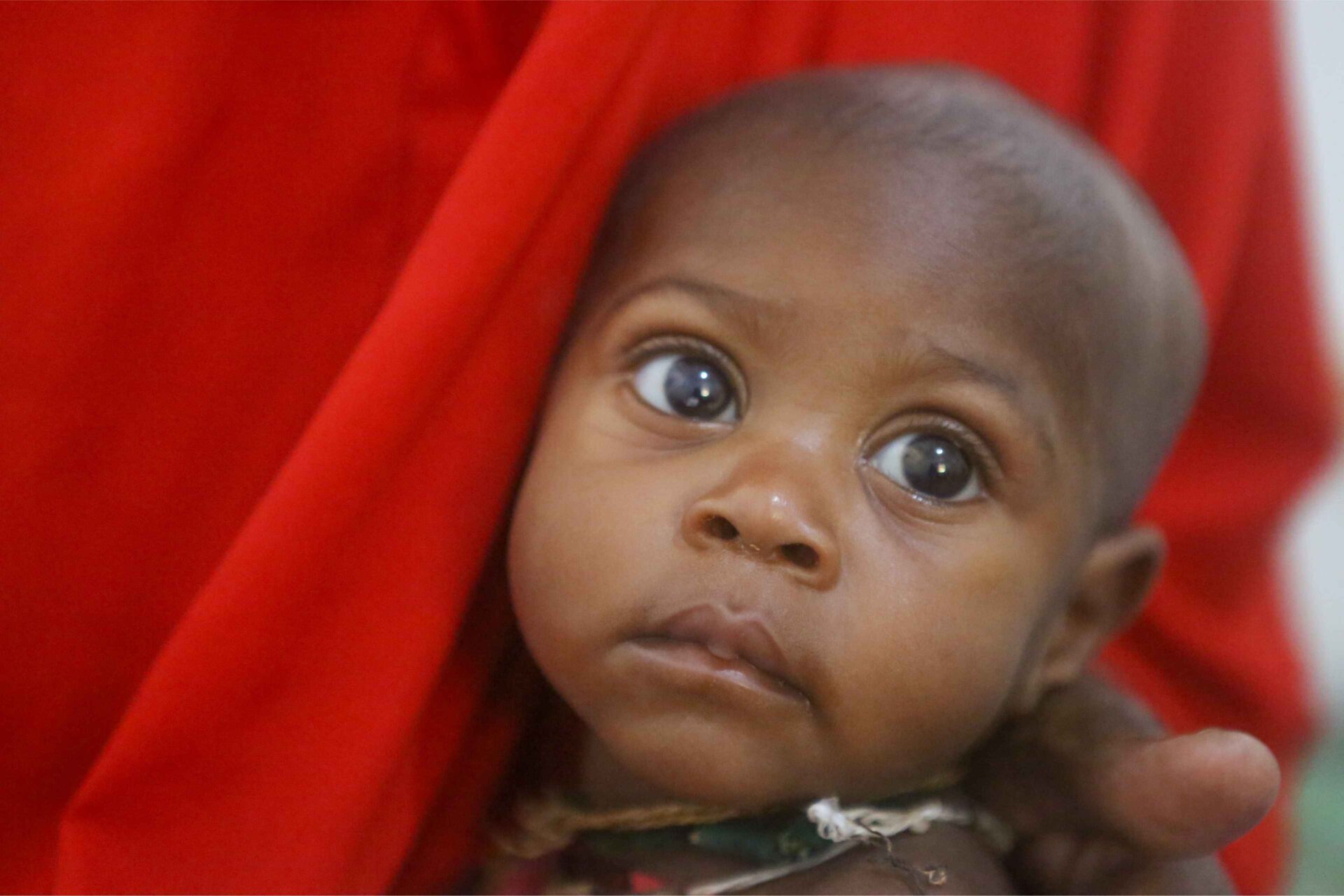
Child wasting, also known as acute malnutrition, is the deadliest form of malnutrition, affecting
42.8 million children globally.
Those children who survive wasting often face stunted growth and cognitive delays, limiting their ability to succeed in school and escape poverty. Even a single episode of wasting sets a child on a trajectory of illness and vulnerability, making them more likely to experience malnutrition again in the future.
Children in fragile and conflict affected contexts are particularly vulnerable to child wasting, especially in Gaza and Sudan where they are currently experiencing famine. In an alarming number of places, starvation and mass child mortality are imminent unless aid is restored at scale. Yet this crisis also extends far beyond humanitarian emergencies — millions of children are suffering in stable settings too, where poverty, food insecurity, social and gender inequalities, infectious diseases and weak health systems continue to drive malnutrition.
Maternal nutrition is central to preventing and ending child wasting. A mother’s nutritional status before and during pregnancy, and while breastfeeding, can mean the difference between her child’s survival or death. When women are undernourished, they are more likely to face life-threatening complications in pregnancy and childbirth and to give birth to low birthweight babies. These babies are at far greater risk of wasting, serious illness, and dying within the first weeks of life. By investing in maternal nutrition, we save lives, protect women’s health, and break the cycle of malnutrition.
Due to global cuts in Official Development Assistance (ODA), humanitarian nutrition programming — essential for the prevention and treatment of wasting in high mortality settings — is now facing an unprecedented funding shortfall. In 20 priority countries, humanitarian response plan targets have been slashed from 42.3 million to 27.9 million women and children, targeting just 42% of total people in need. Yet despite this prioritization effort, a staggering 72% funding gap for humanitarian nutrition still remains. Of the $659 million needed for the remaining four months of 2025, only $186 million has been secured, leaving a $473 million shortfall.
Disruptions in access to health services, the supply of therapeutic and supplemental foods
and programme delivery are already crippling efforts to reach the most vulnerable children.
Analysis from earlier in the year estimated that an additional 2.3 million children with wasting will be left without treatment in 2025 due to the ODA cuts, risking 369,000 preventable deaths.
Broader cuts to preventive services will expose more children to the devastating, life-long impacts of wasting now, and in the years to come. With these funding cuts, the world will be off track to meet the 2030 global target of reducing and maintaining wasting to below 5%.
Political will can stop the wasting crisis and prevent further backsliding. But without urgent action, 2026 will be even deadlier. This is not just a nutrition crisis, it’s a child survival emergency.
As the UN80 initiative seeks to reform and strengthen the UN’s capacity to respond to global challenges, we urge UN Member States to prioritize child wasting at UNGA 2025. A streamlined, coordinated humanitarian system is essential, but must be adequately funded to save lives now, and in the future.
Where reform is needed, it must go hand-in-hand with immediate and sustained investment in child nutrition, in fulfilment of the commitments made at the 2025 Nutrition for Growth Summit.
We cannot afford to ignore this crisis. The economic cost of undernutrition exceeds $2 trillion annually, with countries losing 3-16% of their GDP. Yet, every $1 invested in ending malnutrition yields a $23 return. Increasingly cost-effective interventions and approaches are available, including integrating primary healthcare and nutrition services, locally produced Ready-to-use Therapeutic Foods (RUTF) and the use of locally available nutritious foods in wasting treatment and prevention. Innovative financing solutions also exist that can leverage both national and international resources. Investing in nutrition is, therefore, both a moral and economic imperative.
We, the Wasting Advocacy Coalition and the Global Nutrition Cluster, call on governments,
donors and philanthropies to:
- Close the $473 million immediate funding gap for humanitarian nutrition and commit long-term, sustainable, and coordinated funding for the prevention and treatment of child wasting.
- Ensure UN80 reforms include the prevention and treatment of undernutrition in women and children as a core priority.
- Strengthen coordination of wasting programming across UN agencies and other implementing partners at the global level and invest in nationally-led, adequate coordination mechanisms at the country level to ensure no child falls through the gaps.
- Accelerate the integration of wasting prevention and treatment services into primary healthcare systems.
- Scale up locally led, cost-effective, and innovative solutions.
Child wasting must be viewed as a redline – something we cannot accept or tolerate. With adequate investment and political action, we can reduce levels of wasting and safeguard children’s and countries’ futures. Progress is possible. We have seen child wasting decline, albeit too slowly, from 52 million children in 2016 to 42.8 million in 2024,10 but with falling investment and rising conflict, there is now a serious risk of backsliding, pushing millions more children into malnutrition.
With adequate nutrition, children and their mothers can survive and even thrive, laying the foundation for a healthy future. But without political action and investment, we face a surge in child deaths and a setback in global development that will echo for generations to come.
The time to act is now.
Signed by:
1,000 Days, Action Against Hunger, ACTION Global Health Advocacy Partnership, CARE, Catholic Relief Services, Child Survival Action, Concern Worldwide, Edesia Nutrition, Emergency Nutrition Network (ENN), Global Citizen, Global Health Advocates, Global Nutrition Report, Helen Keller Intl, International Medical Corps, International Rescue Committee, INTERSOS, Islamic Relief USA, N4D,
Nutrition International, Partnership for Maternal, Newborn & Child Health (PMNCH), PATH, RESULTS, Results Canada, Results International (Australia), Results UK, Save the Children, SUN CSN, Terre des hommes foundation (Tdh) – Lausanne, United Against Malnutrition and Hunger, World Vision International.